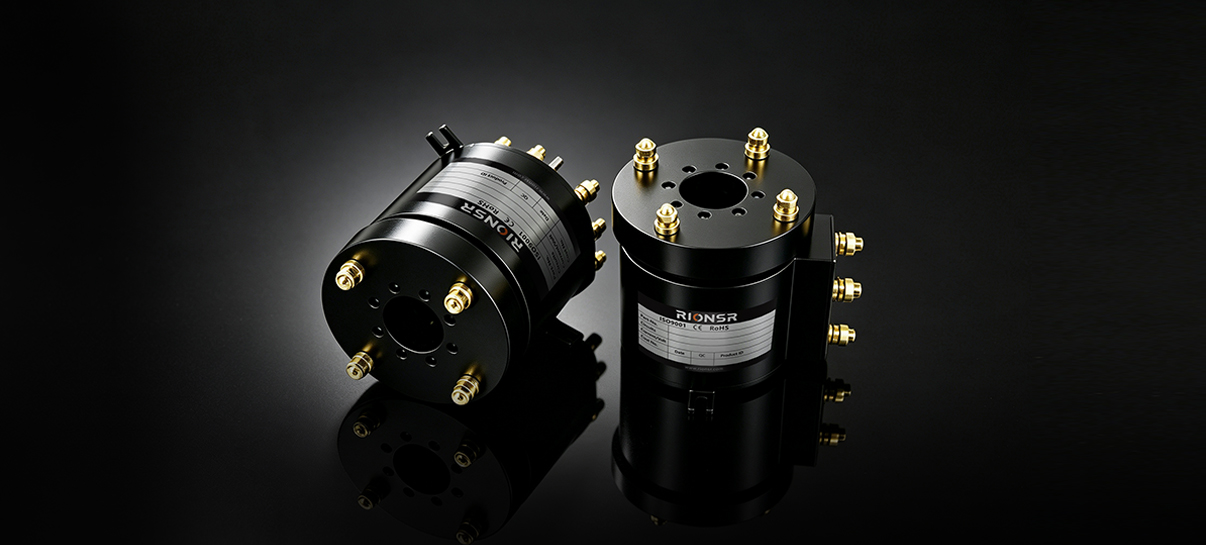
Wind turbines, rotary electroplating lines, industrial welding turrets, heating rollers and port crane cable reels require stable high-power current transmission (tens to thousands of Amps) during continuous 360° rotation. Miniature standard slip rings feature insufficient conductive ring cross-section, leading to instant overheating, burnout and spiking contact resistance under full load. High current power slip rings utilize thickened copper rings, multi-strand precious metal composite brush assemblies and enlarged heat dissipation cavities to safely carry 10A to 1500A, serving as the core power interconnect for all heavy-duty rotary machinery. This guide covers working principles, internal construction, current rating calculation, thermal installation standards, overload troubleshooting and industrial applications to resolve core end-user pain points including overheating, electrical arcing and premature burnout under heavy load.
High Current Power Slip Rings: Complete Guide for Heavy-Duty Rotary Power Supply
Selection Calculation, Heat Dissipation & Overload Fault Resolution
1 Definition & Working Principle
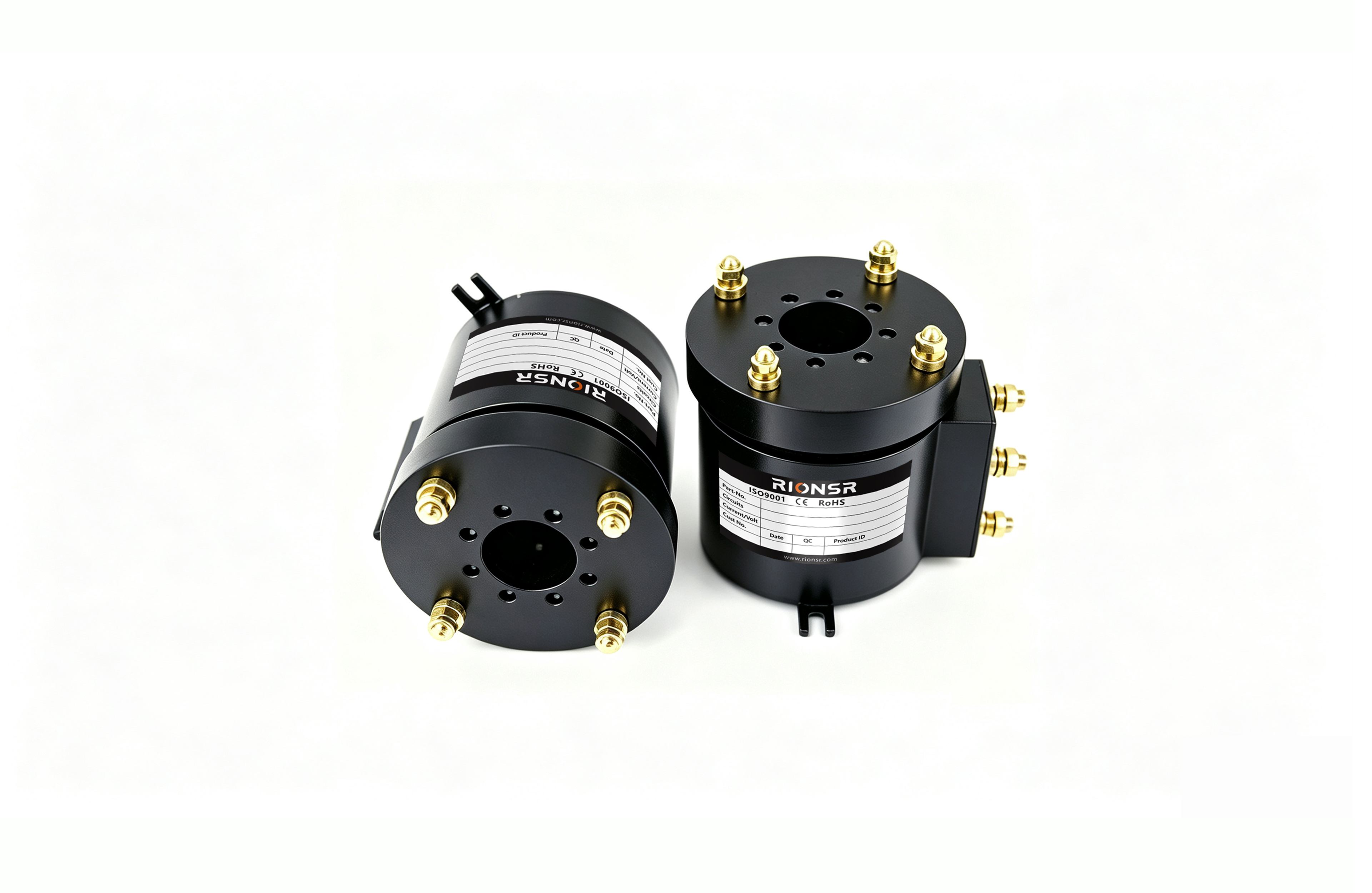
High current power slip rings (heavy-duty conductive slip rings) transmit large power currents via extensive contact surfaces between high-conductivity thick copper rings and parallel wide brush packs. Enlarged contact area reduces current density per unit surface, minimizing heat generation and electric arcing. Sustained large-area conductive contact between stator and rotor maintains stable rated current delivery through full 360° rotation. Units are available as standalone power transmission assemblies or hybrid integrated slip rings combining heavy power circuits with low-voltage control signals and Ethernet data lines. Three mainstream mechanical layouts are offered: through-bore, flange-mounted and blade terminal designs to match diverse equipment mounting footprints.
2 Internal Construction & Heavy-Duty Core Advantages
A standard high current slip ring assembly includes thick oxygen-free copper conductive rings, parallel packs of precious metal alloy brushes, enlarged aluminum heat-dissipation housing, high-temperature resistant insulating layers, through-bore/flange mounting bases and heavy-duty copper terminal lugs. The design addresses five critical pain points for heavy-load machinery manufacturers:
- Extreme Current Carrying Capacity: Single-channel customizable ratings from 10A up to 1500A, fully meeting power demands of wind energy, electroplating and welding equipment;
- Low Heat Generation & Zero Arcing: Parallel brush packs split total load current to reduce surface density; temperature rise limited to ≤45°C under 24/7 full-load operation with no ring track ablation from sparking;
- High-Strength Wear-Resistant Construction: Thickened copper rings paired with wide contact brushes maintain stable performance over millions of heavy-load rotations, ideal for year-round outdoor wind turbine deployment;
- All-In-One Integrated Layout: High-power main circuits combined with multi-channel low-voltage signal paths to deliver power and control data through one single unit, simplifying equipment wiring architecture;
- Adaptable Wide-Temperature Thermal Design: Thick aluminum heat sink housing as standard, with optional water-cooled custom variants for stable operation on high-temperature heating rollers and metallurgical rotary furnaces.
4 High Current Slip Ring Selection Calculation & Key Parameter Confirmation
- Rated Current Sizing: Multiply equipment peak operating current by a 1.2~1.5 safety margin to avoid chronic overheating under sustained full load. Example: For 200A peak load, select a 250A~300A rated slip ring;
- Channel Configuration: Standalone power-only circuits or hybrid power+control signal integrated layouts; blade terminal structures recommended for single high-current channels;
- Thermal Dissipation Selection: Standard air-cooled aluminum housing for indoor ambient-temperature machinery; custom water-cooled assemblies for high-temperature metallurgical equipment running 24/7 full load;
- Mounting Layout: Through-bore models for machinery requiring central shaft penetration; flange-mounted units for end-face fixed installation; compact blade terminal variants for space-restricted equipment;
- Environmental Protection Rating: IP54 / IP65 dust/waterproof enclosures for outdoor wind power and port machinery; base IP51 rating sufficient for dry indoor production workshops.
5 Thermal Installation Standards
- Secure terminal lugs with standard copper busbars, apply conductive grease to contact surfaces to reduce terminal resistance and localized heating;
- Reserve a minimum 15cm clearance around slip ring housing for natural airflow; avoid fully sealed cabinet installation without ventilation, install auxiliary cooling fans for high-temperature operating environments;
- Match cable cross-section to slip ring rated current; undersized cabling will generate excessive heat under heavy load; avoid sharp bending of high-power conductors;
- Maintain strict coaxial alignment during assembly – eccentricity causes unilateral brush wear, concentrated current flow and electric sparking;
- Regularly inspect water circulation loops for water-cooled custom models to prevent rapid temperature spike and burnout from coolant loss.
6 Common Overload Malfunctions & Resolutions
- Excessive housing temperature & smoke emission: Insufficient current safety margin or inadequate ventilation; upgrade to higher-rated slip ring and add forced air cooling;
- Visible electric arcing & black ablation marks on ring tracks: Worn brush packs or loose terminal connections; retorque all lugs and return unit to factory for brush assembly replacement;
- Overcurrent tripping & short-circuit alarms under full load: High-temperature degradation of internal insulating layers; upgrade to slip rings manufactured with high-temperature resistant insulation materials;
- Poor contact resistance after long-term outdoor deployment: Corroded terminal surfaces; replace with IP65 corrosion-resistant sealed models and clean terminal oxidation deposits quarterly.
7 Long-Term Operation & Maintenance Precautions
Clear accumulated metallic dust inside the housing every three months; avoid continuous operation above rated current; inspect sealing waterproof structures regularly for humid or salt-spray environments; test coolant circulation monthly for water-cooled variants; schedule annual brush wear inspection shutdowns for wind turbine slip rings.
RIONSR manufactures full-range high current slip rings from 10A to 1500A, customizable in through-bore, flange and blade terminal mechanical layouts, with integrated control signal and Ethernet channels available. Air-cooled and water-cooled thermal dissipation options eliminate recurring power supply faults including overheating, electric arcing and premature burnout for heavy-duty rotary machinery in wind power, electroplating and welding industries.