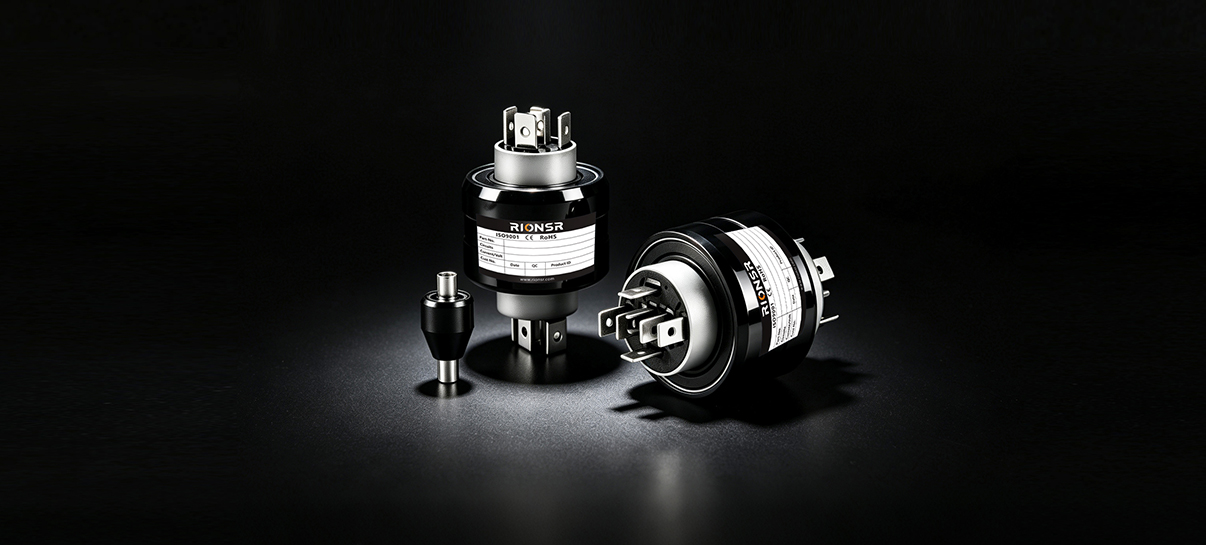
Rotary encoders, industrial CT scanners, high-speed test turrets and precision sensor equipment demand ultra-stable contact resistance across rotating interfaces. Conventional carbon brush slip rings suffer from brush abrasion and contact resistance drift after prolonged operation, causing analog signal distortion and lost encoder pulses. Mercury liquid metal slip rings utilize liquid mercury as a conductive medium, eliminating solid frictional contact to maintain milliohm-level stable resistance with zero performance degradation over millions of rotations, making them the dedicated rotary interconnect for high-precision weak signal transmission. This article covers operating principles, product pros & cons, step-by-step installation, industrial applications, fault resolution and mandatory environmental safety protocols.
Mercury Liquid Metal Slip Rings
Zero-Wear Ultra-Low Resistance Rotary Connection – Working Principle, Installation & Safety Guidelines
1 Definition & Working Principle
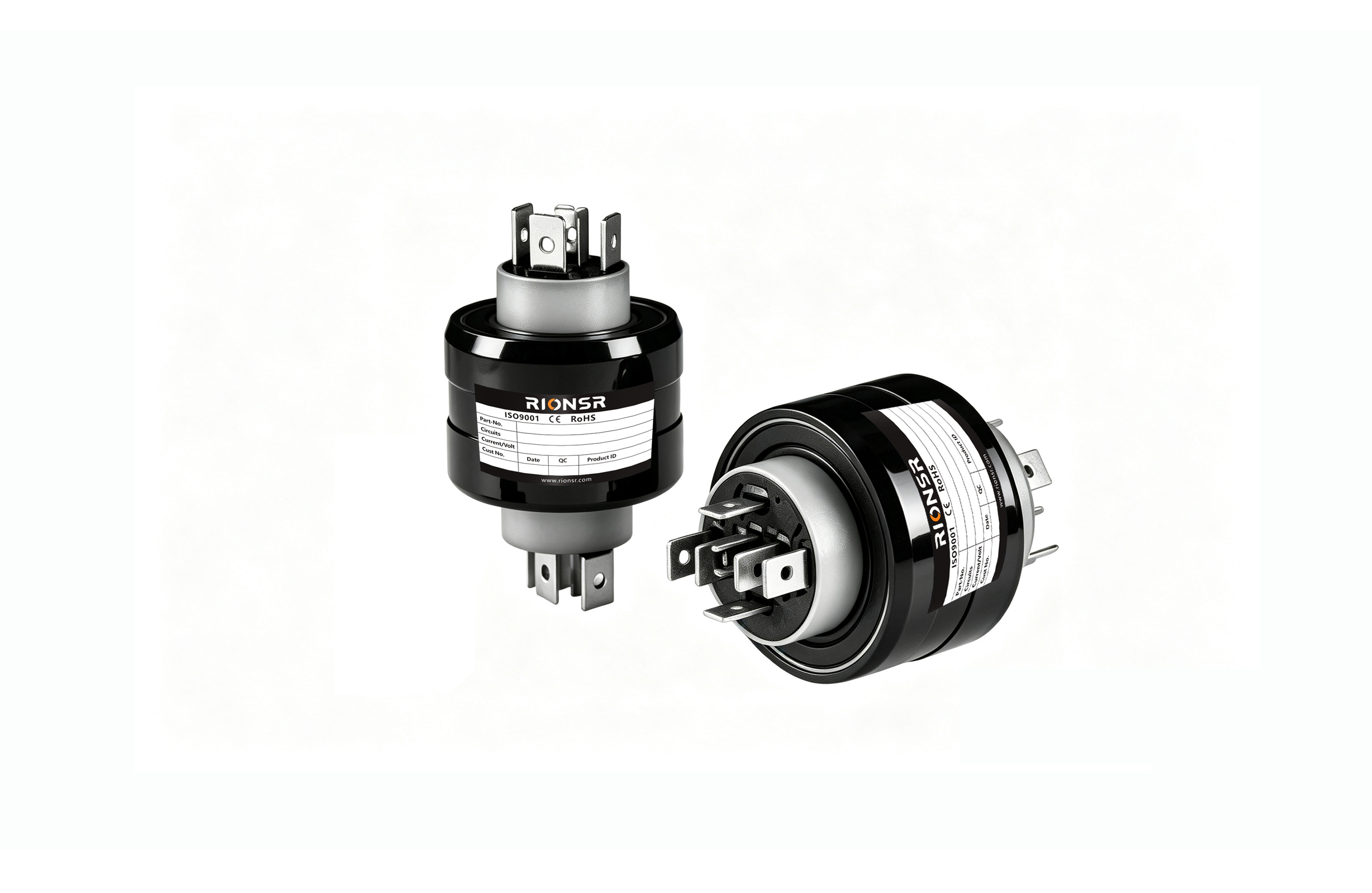
Mercury slip rings are hermetically sealed liquid metal rotary connectors. A sealed cavity between stator and rotor is filled with high-purity liquid mercury that forms a continuous conductive path during rotation. As the rotor spins, fluid mercury flows freely to sustain uninterrupted electrical conduction with no brush or metal ring friction, eliminating mechanical wear and carbon dust accumulation. Contact resistance stabilizes below 1mΩ with minimal impedance fluctuation even at thousands of RPM, perfectly suited for weak analog sensor signals, encoder pulses and low-current high-frequency data transmission. Product variants include single-channel and multi-channel assemblies, with heavy-duty thick-walled cavity models available for higher current ratings.
2 Internal Construction, Core Advantages & Limitations
Core Internal Components
Sealed stainless steel housing, liquid mercury containment cavity, insulating isolation gaskets, threaded mounting ports, wire terminal lugs and double-layer anti-leakage sealing gaskets.
Key Customer Advantages
- Zero Mechanical Wear & Maintenance-Free Lifespan: Friction-free design eliminates consumable replacement over millions of rotations, cutting long-term equipment maintenance costs;
- Ultra-Stable Low Contact Resistance: Dynamic resistance fluctuation below 0.05mΩ ensures distortion-free weak sensor signals and zero encoder pulse loss;
- High Rotational Speed Compatibility: Standard models support up to 1800 RPM, custom variants reach 3600 RPM – ideal for high-speed laboratory test turrets;
- Zero Electrical Noise & Arcing: Liquid conduction eliminates frictional spark discharge, preventing EMI interference with precision measuring instruments;
- Compact Footprint: Smaller overall dimensions than equivalent current-rated carbon brush slip rings, enabling integration inside space-restricted precision machinery.
Critical Limitations for Design Reference
- Mercury is a toxic liquid metal; cracked housing creates hazardous leakage risks. Exercise caution for food processing and medical cleanroom environments – non-toxic eco liquid alloy slip rings are available as direct replacements;
- Limited operating temperature window: Mercury fluidity degrades and resistance rises outside the -30°C ~ +60°C range;
- Single-channel maximum current capped at 300A; high-current applications require heavy-duty carbon brush slip rings.
3 Primary Industrial Applications
- Precision Metrology: Rotary encoders, torque sensors, strain gauge test turrets, laboratory high-speed signal acquisition rigs;
- Medical Imaging: Industrial CT scanners, rotary dental scanning equipment, compact MRI auxiliary rotary interfaces;
- Industrial Automation: High-speed wire winding machines, vacuum coating rotary rollers, compact rotary electroplating equipment;
- Inspection Instrumentation: High-speed material fatigue test benches, non-destructive testing rotary probes;
- Small radar & low-speed RF signal tracking gimbals.
4 Step-by-Step Standard Installation Guide
- Locate the engraved UP directional arrow on housing; the arrow must face vertically upward during installation. Inverted or tilted mounting causes mercury leakage from the sealed cavity;
- Thread rotor port tightly onto equipment shaft and secure with lock nuts to prevent cavity torsion damage from loose rotating shafts;
- Reserve a minimum 10cm slack for outgoing cables; tensile force during rotation will tear sealed terminal joints;
- Deploy horizontal dedicated models for horizontal mounting layouts; vertical standard mercury slip rings for upright installation;
- Complete no-load 50 full rotations post-installation, inspect housing for fluid leakage and abnormal noise before applying electrical load.
5 Common Malfunctions, Resolutions & Mandatory Safety Protocols
Standard Fault Troubleshooting
- Periodic signal jitter & elevated resistance fluctuation: Unit mounted upside down, displacing mercury fluid level; re-install following UP arrow orientation;
- Complete power / signal outage: Cracked sealed cavity with mercury leakage. Do not disassemble the unit; contact RIONSR for hazardous waste recycling;
- Signal distortion under high-temperature operation: Ambient temperature exceeds 60°C; install cooling fans or upgrade to eco-friendly wide-temperature liquid alloy slip rings;
- Abnormal noise during low-speed rotation: Aged internal sealing gaskets; return to factory for seal component replacement.
Mandatory Safety Operation Rules
- Immediately cease operation if housing cracks and mercury leaks. Wear protective gloves to contain spilled liquid mercury, store in sealed containers and arrange disposal via certified hazardous waste agencies – never discard into general waste or drainage;
- Avoid deployment near high-temperature heat sources or open flame; mercury vapor poses severe toxic inhalation hazards;
- Prioritize non-mercury eco liquid alloy slip rings for medical cleanrooms and food manufacturing facilities to eliminate contamination risks;
- Do not discard end-of-life mercury slip rings with standard scrap; return all units to RIONSR for professional harmless treatment.
6 Routine Maintenance & Product Selection Tips
Mercury slip rings require zero routine maintenance under rated operating conditions; only annual visual inspection for external leakage is recommended. For high-temperature, cleanroom or eco-compliant production environments, RIONSR non-toxic mercury-free liquid alloy slip rings deliver matching ultra-low resistance performance without safety hazards. Always confirm four core parameters during selection: rated current, maximum rotational speed, mounting orientation and operating temperature range to prevent leakage and signal failure from improper model matching.
RIONSR manufactures standard single & multi-channel mercury slip rings alongside eco-friendly mercury-free liquid alloy alternatives, balancing ultra-stable low-resistance rotary transmission and workplace safety for precision sensor and high-speed test equipment weak signal rotary applications.