
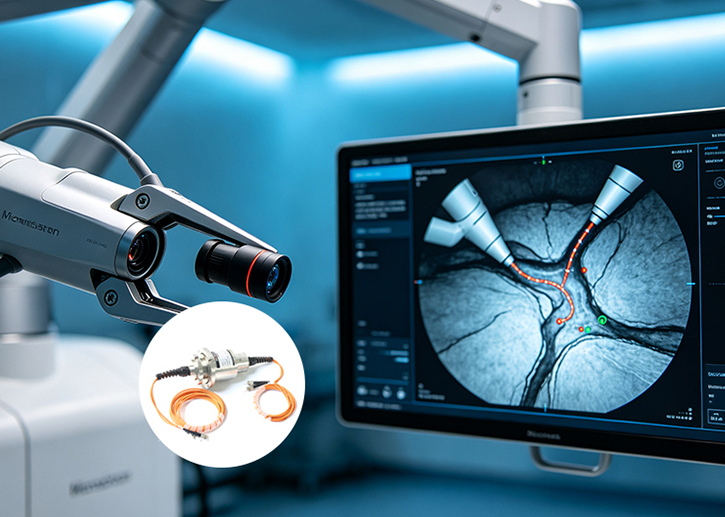
Designed to eliminate electromagnetic interference for minimally invasive imaging equipment, RIONSR contactless fiber slip rings are engineered for high-speed image transmission of miniature endoscopic rotary probes. Solving endoscope pain points of EMI distortion, weak image distortion and limited probe miniaturization space, they are matched with HD electronic endoscope systems for gastroenterology, respiratory and urology departments.
Miniature imaging probes at the tip of electronic endoscopes perform 360° left-right rotation with built-in CMOS HD cameras, requiring lag-free real-time image transmission to main monitors. Conventional metal conductive slip rings generate electromagnetic noise via contact friction, creating snowflake artifacts and blurring tiny lesion details. Standard miniature conductive rings feature bulky dimensions that cannot fit ultra-thin endoscope channels. Contacts wear rapidly under repeated rotation, triggering signal cutoffs and lost intra-operative footage. Ordinary housing corrodes under routine endoscope disinfectant soaking and causes contact failure, requiring factory repair and delaying outpatient service. Mercury-based conductive products are prohibited for clinical endoscopic use.
RIONSR contactless single-mode fiber slip rings eliminate metal friction and electromagnetic noise, with single-channel bandwidth up to 10Gbps for lag-free 4K endoscopic video transmission. Ultra-miniature outer dimensions fit narrow lumens of ultra-thin probes. Optical paths are fully isolated from electrical clutter to raise image signal-to-noise ratio and render tiny lesions clearly. IP51 moisture & disinfectant resistant housing withstand routine soaking in glutaraldehyde and medical cleaners. Rated speed 0–200 RPM supports flexible multi-angle probe rotation. Every unit passes millions of miniature reciprocating rotation and disinfectant durability tests, rated service life of 600 million rotations for daily high-volume endoscopic surgeries and outpatient examinations.
After mass deployment on endoscope systems at a gastroenterology specialty hospital, image noise and signal cutoff faults dropped by 93%, drastically reducing factory return repair frequency. Free of wearable contact parts, the fiber slip ring requires no full replacement within ten years and slashes long-term endoscope maintenance cost while improving diagnostic accuracy of endoscopic examinations.
This fiber slip ring also fits rotary ENT endoscopes and minimally invasive laparoscopic imaging probes. Addressing three core clinical demands of EMI-free imaging, ultra-miniature size and disinfectant resistance, it delivers stable high-definition intra-operative endoscopic footage.