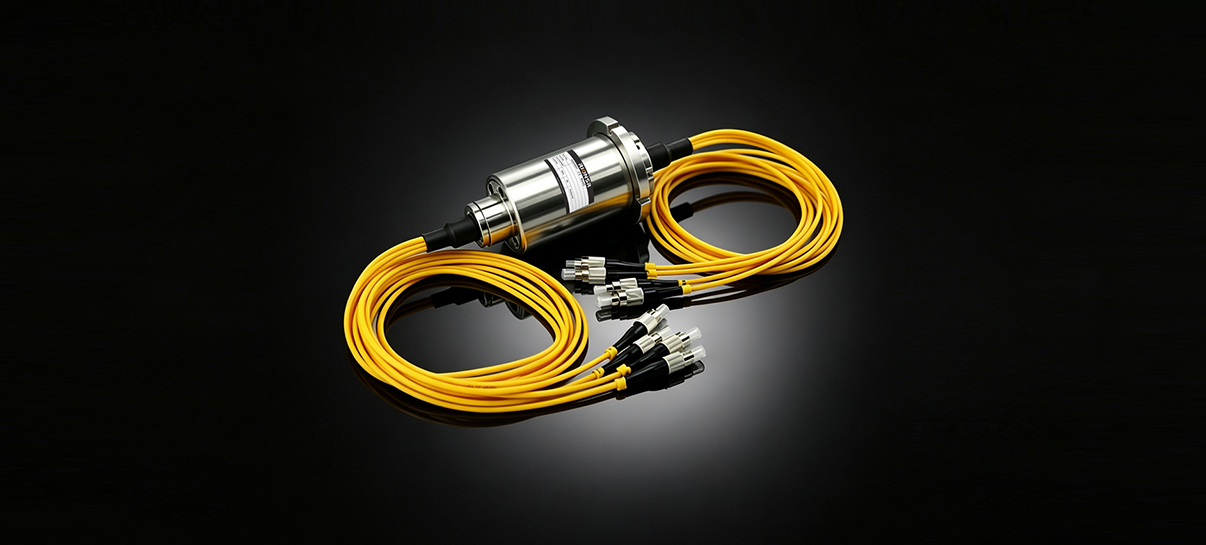
For gimbal cameras, tethered UAV pods, subsea radar, industrial robots and other rotary equipment, continuous 360° rotation with stable high-bandwidth data transmission has long been a major industry pain point. Conventional electrical slip rings suffer from EMI interference and bandwidth limitations, frequently causing video freezes and data loss. Fiber Optic Rotary Joints (FORJs) stand as the optimal solution for lossless optical signal transmission across rotating interfaces. This article covers working principles, internal structure, selection criteria, installation standards, maintenance and common troubleshooting to assist mechanical & electrical engineers in system design.
Fiber Optic Rotary Joints (FORJs)
Complete Guide to High-Speed Optical Signal Transmission, Selection & Maintenance
1 Definition & Working Principle
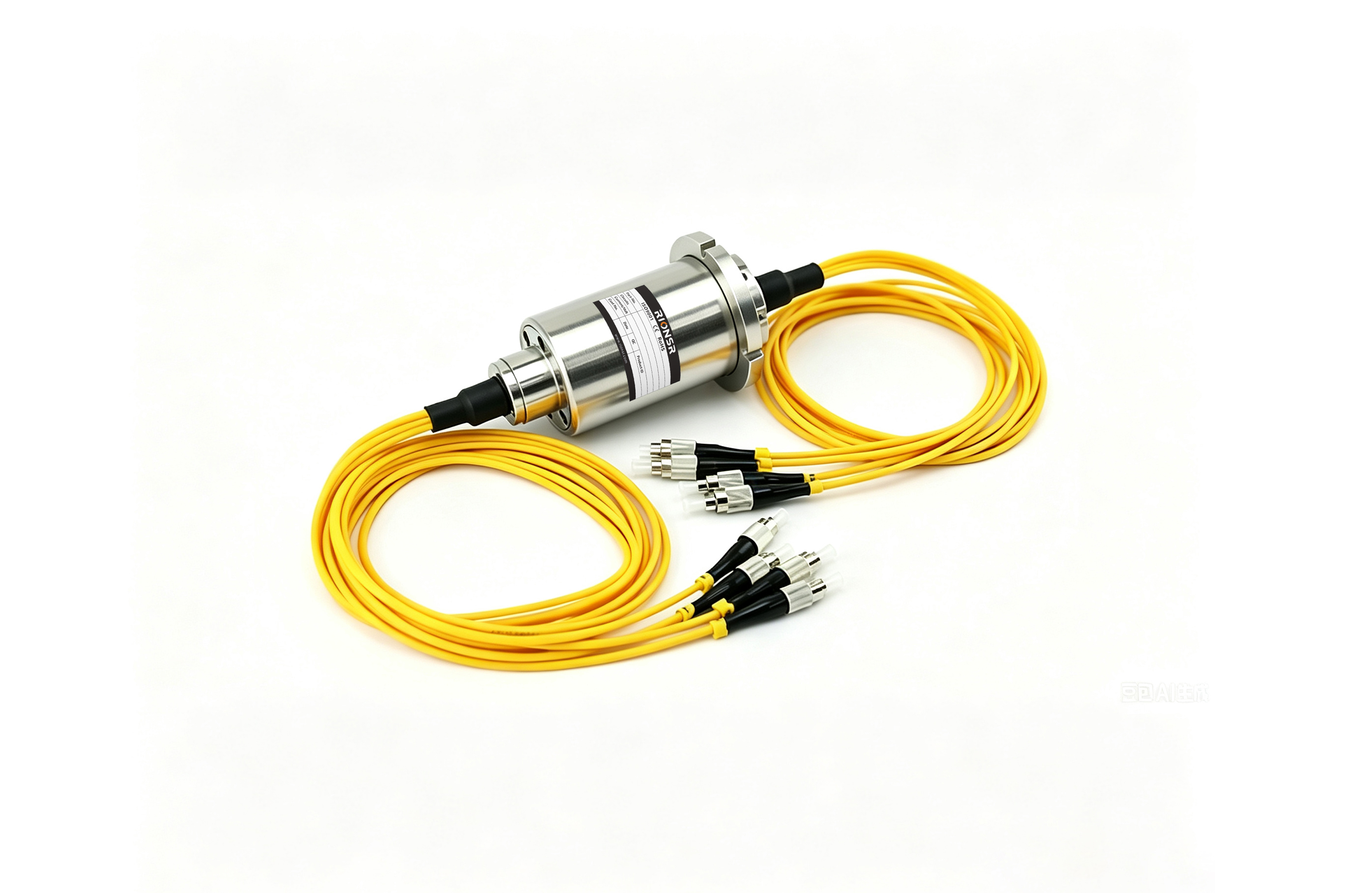
A fiber optic rotary joint is a precision rotary interconnect that delivers uninterrupted optical signals between stationary stators and rotating rotors, fully immune to electromagnetic and radio frequency interference with zero electric arcing risk. Its core operation relies on built-in collimating lenses and optical coupling assemblies: optical signals emitted from stator-side fibers are collimated into parallel beams, then precisely coupled into rotor-side fibers through the rotary gap. No physical contact exists between optical components, maintaining ultra-low optical attenuation even under sustained high-speed rotation. FORJs are categorized into single-mode and multi-mode variants: single-mode units support long-distance, ultra-high-bitrate transmission, while multi-mode models serve short-range, multi-channel integrated machinery.
2 Internal Structure & Core Advantages
A standard FORJ consists of five precision assemblies: fiber connector interfaces, optical collimating lenses, zero-clearance precision bearings, sealed metal housing, and split stator/rotor optical circuits. Its key benefits directly address end-users’ core pain points:
- Full EMI Immunity: Optical signals carry no electric current, allowing parallel wiring alongside high-power cables without cross-talk, ideal for military radar and medical imaging systems;
- Ultra-High Bandwidth: Single-channel throughput ranges from 10Gbps to 100Gbps, compatible with 4K/8K video, high-speed Ethernet and LiDAR data;
- Enhanced Safety: Eliminates electric sparks and leakage hazards, certified for explosion-proof oil & gas and subsea applications;
- Long Transmission Reach: Single-mode optics support kilometer-level signal delivery without repeaters, solving long-distance monitoring for offshore wind power and underwater ROVs;
- Hybrid Integration Compatibility: Can be combined with conductive slip rings to form opto-electrical integrated units, transmitting power and optical signals simultaneously to simplify equipment wiring.
3 Key Industrial Applications
- Military & Security: Airborne EO pods, vehicle-mounted radar, coastal surveillance turrets;
- Film & Aerial Photography: UAV gimbals, aerial cinematography cameras, 360° panoramic capture rigs;
- Offshore Engineering: Underwater ROV robots, subsea cable reels, subsea camera turrets;
- Industrial Automation: High-precision inspection turrets, CT medical scanners, rotary scanning modules for intelligent warehousing;
- New Energy: Offshore wind turbine monitoring systems, solar tracking rotary brackets.
4 Slip Ring Selection Guide
- Fiber Mode Confirmation: Single-mode for long-distance, high-speed data; multi-mode for short-range, cost-effective multi-channel layouts;
- Channel Count: Single-channel base models, 2/4/8 multi-channel units, WDM integrated variants (multiple optical signals transmitted via one single channel to reduce overall footprint);
- Environmental Protection Rating: Outdoor/subsea equipment requires IP67/IP68 sealed housings with seawater-resistant stainless steel construction;
- Rotational Speed Matching: Low-speed gimbals ≤300 RPM; high-speed radar systems require customized high-speed bearing assemblies (max 5000 RPM);
- Mixed Power & Signal Requirements: Directly adopt opto-electrical hybrid slip rings to eliminate alignment errors caused by separate assembly.
5 Installation Specifications & Routine Maintenance Installation Standards
- Never pull fiber leads with excessive force; reserve 10–15cm slack to avoid tensile load during rotation;
- Maintain strict coaxiality during equipment assembly — eccentricity leads to optical misalignment and sharp attenuation spikes;
- Avoid touching fiber end faces with bare hands or contaminated surfaces; clean end faces with lint-free wipes before assembly;
- Apply specialized waterproof grease evenly to sealing gaskets for subsea equipment, inspect seal integrity quarterly.
Maintenance & Fault Troubleshooting
FORJs are nearly maintenance-free, requiring only annual inspection. Common malfunctions and fixes:
- Severe optical attenuation & intermittent data loss: Caused by contaminated end faces or assembly eccentricity; clean fiber surfaces and recalibrate coaxial alignment;
- Signal fluctuation under high-temperature operation: Upgrade to high-temperature resistant specialty fiber variants and add heat-dissipation housing;
- Water ingress damage after long-term outdoor deployment: Replace with higher IP-rated sealed models and swap aged gaskets regularly;
- Complete optical signal outage: Internal fiber breakage. Do not disassemble optical components independently; contact RIONSR for factory optical module replacement.
6 Operation Precautions
Avoid heavy impact or dropping the unit; maintain fiber bending radius above the specified minimum value; deploy anti-corrosion coated housings for corrosive environments; install shock-absorbing brackets for high-vibration machinery to prevent permanent optical misalignment.
RIONSR offers custom single-channel, multi-channel and opto-electrical hybrid fiber optic rotary joints, tailored to meet high-speed optical transmission demands for all rotary machinery, resolving long-standing limitations of conventional electrical slip rings including insufficient bandwidth and signal interference.