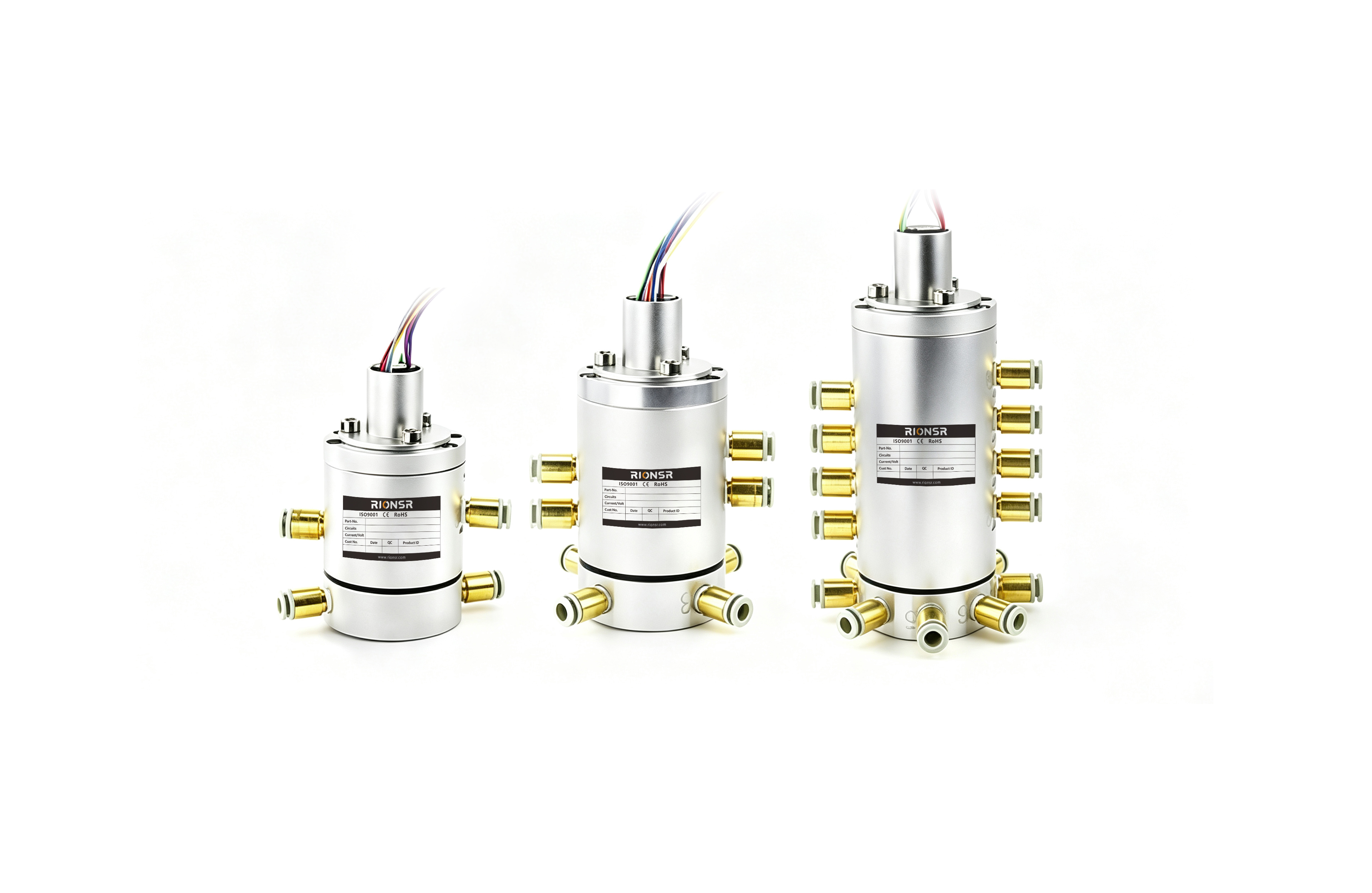
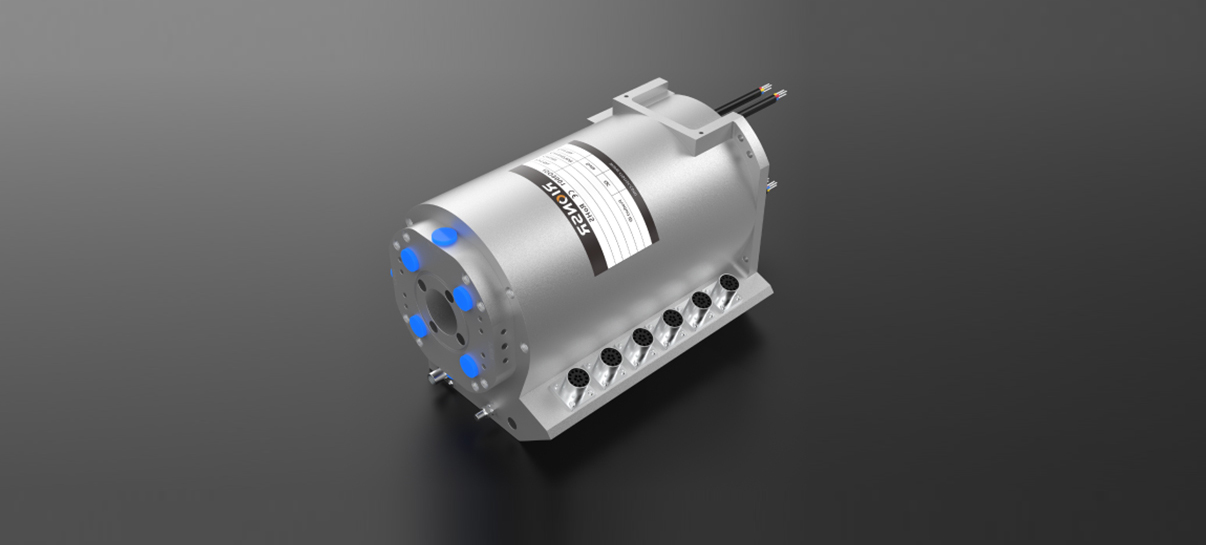
1 Definition of Electro-Pneumatic Slip Rings
Ethernet slip rings (network slip rings / RJ45 slip rings) are high-speed data rotary connectors engineered for rotating machinery, delivering stable transmission of 10/100/1000BASE-T industrial Ethernet, Profinet, EtherCAT and other fieldbus protocols during unlimited 360° continuous rotation. Standard general slip rings suffer severe packet loss, latency and crosstalk when transmitting network signals. Ethernet slip rings adopt shielded precious metal rings and differential impedance matching structures to maintain lossless real-time gigabit communication, while supporting simultaneous mixed transmission of power and digital IO signals. They are widely deployed in automated production lines, wind power equipment and machine vision inspection systems.
2 Dual-Medium Synchronous Transmission Working Principle
Electro-pneumatic slip rings consist of two fully isolated modules (pneumatic transmission unit & electrical transmission unit) with separation design to eliminate cross-contamination between air leakage and electrical faults.
- Pneumatic unit: Air supply connects to the stator, with precision sealed rotary air chambers inside; air outlets route from the rotor. PTFE wear-resistant sealing rings limit leakage below 0.5L/min at low speeds, compatible with compressed air, vacuum and nitrogen media.
- Electrical unit: Matches standard conductive slip ring architecture, with sliding contact between precious metal brushes and conductive rings to transmit power, Ethernet and solenoid valve control signals.
- Synchronized operation: The stator flange mounts to stationary frames, while the rotor rotates synchronously with equipment loads. Independent air and electrical channels operate without mutual interference, enabling simultaneous vacuum gripping, rotary power supply and data communication. High-end custom variants expand hydraulic oil passages and fiber optic channels to form 4-in-1 hybrid electro-pneumatic-hydraulic-fiber slip rings.
3. Unique Core Advantages of Electro-Pneumatic Slip Rings
- Integrated design reduces overall machine footprint by 35%, eliminating separate assembly of two discrete rotary components and cutting production costs.
- Complete isolation between air and electrical circuits; PTFE seals prevent gas leakage from corroding electrical contacts and extend service life.
- Ultra-low breakaway torque via composite precision bearings, minimal rotational friction with negligible load impact on robots and miniature turrets.
- Full customization flexibility: 1~12 pneumatic channels, 3~80 electrical circuits, operating air pressure 0~0.8MPa compatible with most automated production lines.
- Easy maintenance: Modular split structure allows independent replacement of pneumatic sealing components without full slip ring replacement.
4 Main Automation Industry Applications
- Lithium battery manufacturing equipment: Pouch battery lamination machines, electrode coating equipment, vacuum adsorption rotary tooling for synchronized vacuum pressure and servo signal transmission.
- Semiconductor wafer handling robotic arms: Vacuum wafer gripping with simultaneous rotary transmission of encoder and Ethernet signals, oil-free cleanroom compliant design.
- 3C electronics lamination & bonding equipment: Rotary adsorption fixtures using compressed air-driven clamps with real-time inspection signal transmission.
- Automated packaging machinery: Rotary blister packaging stations, cap tightening modules, pneumatic product clamping paired with photoelectric sensor signal circuits.
- PV module rotary test benches, laser cutting rotary tooling.
5 Core Selection Parameters to Resolve Air Leakage, Signal Interference & Insufficient Pressure Pain Points
- Pneumatic channel quantity & operating pressure: Confirm required air circuit count; standard working pressure 0~0.8MPa, custom 1.2MPa pressure-resistant sealing assemblies for high-pressure processes.
- Electrical circuit layout: Separate high-current solenoid loops, high-speed Ethernet and low-voltage sensor signals with isolation shielding.
- Maximum allowable rotational speed: Standard range 0~600RPM; low-friction seal custom variants for high-speed rotary equipment.
- Transmission media type: Vacuum-specific seals for negative pressure workflows, corrosion-resistant fluororubber seals for nitrogen and inert gas applications.
- Cleanroom classification: Oil-free clean-grade variants for semiconductor and medical equipment, standard general models for regular workshop environments.
6 Installation Standards to Prevent Air Leakage & Signal Malfunctions
- Stator mounting: Horizontal flange installation mandatory; tilted assembly causes uneven sealing stress and air leakage.
- Pneumatic fitting assembly: Uniform PTFE tape sealing on threaded ports; excess tape must not block air flow passages.
- Pipeline zoning: Separate air tubing and electrical cables on opposite sides, avoid cross-twisting to reduce electromagnetic interference.
- Pressure commissioning: Gradually ramp air pressure to rated operating level under no-load conditions, hold 5 minutes to inspect for air leakage.
- Rotation validation: Run continuous rotation for 1 hour, monitor consistent air pressure and uninterrupted signal transmission.
7 Routine Maintenance & Rapid Fault Resolution
- Minor air leakage: Worn PTFE sealing rings. Solution: Replace independent sealing kits without full slip ring replacement.
- Intermittent signal dropouts: Static interference from compressed air flow impacting housing. Solution: Fully earth slip ring housing, install pressure regulators on air supply lines.
- Stiff rotation & increased torque: Dust ingress into bearings via pneumatic passages. Solution: Install precision filters upstream of air supply, periodically purge internal air chambers.
- Accelerated seal aging: Water/oil contamination in air supply. Solution: Add drying and oil removal filters, regularly drain condensate from air storage tanks.