1 Definition of Capsule Slip Rings
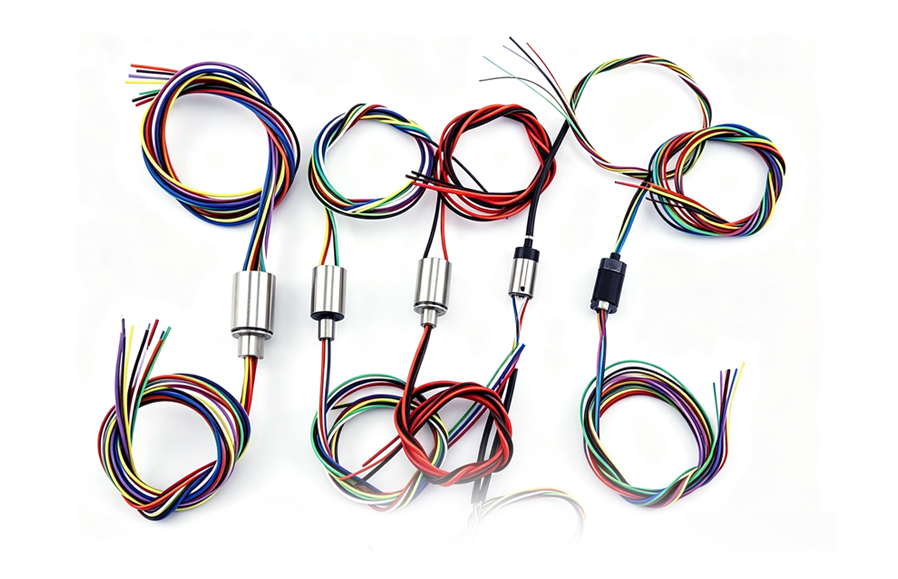
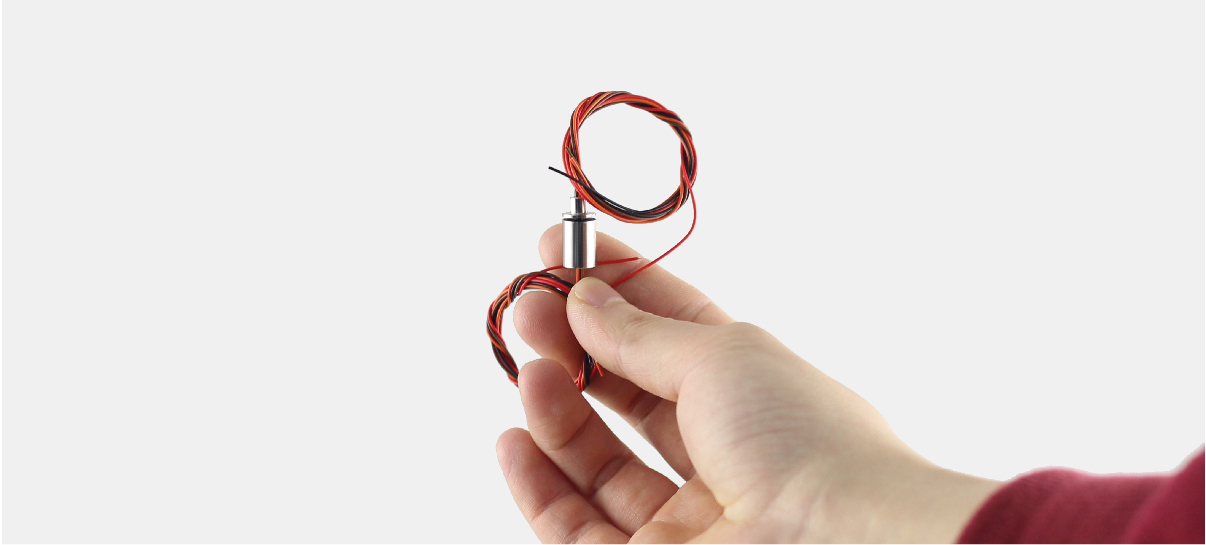
Also known as cap slip rings, capsule slip rings are compact, sealed integrated rotary electrical connectors. Assembled with aluminum alloy/stainless steel housing, precious metal conductive rings, alloy brushes and micro precision bearings, they adopt a mini cylindrical structure optimized for space-limited equipment. They deliver stable power, control signals and HD video during unlimited 360° continuous rotation, differing from large through-bore slip rings by their lightweight footprint and direct flange mounting design without central shaft clearance. They serve as core rotary components for pan-tilt cameras, miniature robots and medical instruments.
2 Internal Structure & Working Principle
A capsule slip ring consists of two core assemblies: stationary stator and rotating rotor.
- Rotor: A central stainless steel spindle stacked with gold-plated conductive rings separated by ceramic insulation layers to eliminate signal crosstalk, with cables routed out from the rotating side.
- Stator: Equipped with high-elastic gold alloy brush wires that maintain constant light pressure against conductive rings to form a sliding conductive path, paired with dual micro bearings for smooth rotation.
- Sealed housing: Die-cast integrated shell with IP51~IP54 dust and moisture resistance to prevent contaminant abrasion of internal precious metal contacts.
- Operating logic: The rotor rotates synchronously with equipment loads, while brushes sustain steady contact resistance against conductive rings. Power, Ethernet, RS485 and encoder signals remain uninterrupted, eliminating cable tangling and breakage on rotary machinery.
3 Key Product Advantages
- Ultra-low torque: Micro precision bearings and soft precious metal contact deliver rotational resistance below 0.01N·m, adding negligible load to miniature gimbals and handheld devices.
- Extended wear lifespan: Gold-on-gold contact pairing minimizes abrasion, standard units support up to 10 million rotations.
- Multi-signal compatibility: Single units transmit mixed power, USB, CAN bus and HD video without stacking multiple slip rings.
- Lightweight integration: Standard outer diameters from 12mm to 35mm, weight ranging 20~60g for compact automation integration.
4 Main Industrial Applications
- Opto-electronic pan-tilt & camera stabilizers: Security surveillance, drone aerial photography, machine vision inspection turrets for 360° seamless video transmission.
- Precision medical equipment: LED surgical shadowless lamps, mini CT scanning probes, rotational rehabilitation devices, compliant with low EMI medical standards.
- Small Autonomous Mobile Robots (AMRs): Inspection robots, pipeline crawler rotary sensor turrets.
- Smart consumer devices: Rotating ovens, panoramic cameras, rotational beauty medical instruments.
5 Core Selection Criteria to Avoid Common OEM Pitfalls
- Circuit channel quantity: Separate power and signal circuits; encoder & Ethernet signals require dedicated independent channels, never shared with high-current loops.
- Rated current & voltage: Standard signal channels support 2A, power channels max 8A; medical variants require ≥500V dielectric strength.
- Max operating speed: Standard range 0~200RPM, custom high-speed models up to 500RPM for high-speed gimbals
- Environmental IP rating: IP54 for dusty workshop environments, IP51 standard for indoor clean equipment.
- Custom cable options: Customizable stator/rotor lead lengths and connectors (Dupont, aviation plugs) matching host machine structures.
6 Common Malfunctions, Root Causes & Quick Fixes
- Flickering signals, distorted video: Dust buildup on contacts or brush wear. Solution: Blow dust out of housing gaps with low-pressure air; replace unit for severe abrasion (sealed capsule slip rings cannot be disassembled for repair).
- Stiff rotation, increased friction: Bearing contamination by water or dust. Solution: Upgrade to higher IP-rated models, install external dust/water shields on equipment.
- Rising contact resistance: Long-term overcurrent overload. Solution: Recalculate single-channel current load, upgrade high-current capsule slip ring variants.
- Electromagnetic noise during transmission: Unshielded signal wires. Solution: Custom slip rings with shielded cables.
7.Routine Maintenance Standards
Capsule slip rings are sealed maintenance-free assemblies; disassembly of housing is strictly prohibited. Inspect lead insulation for cracking monthly. For high-temperature/humidity operating environments, conduct signal stability tests every 6 months. Avoid forced twisting of leads during installation to prevent brush misalignment.